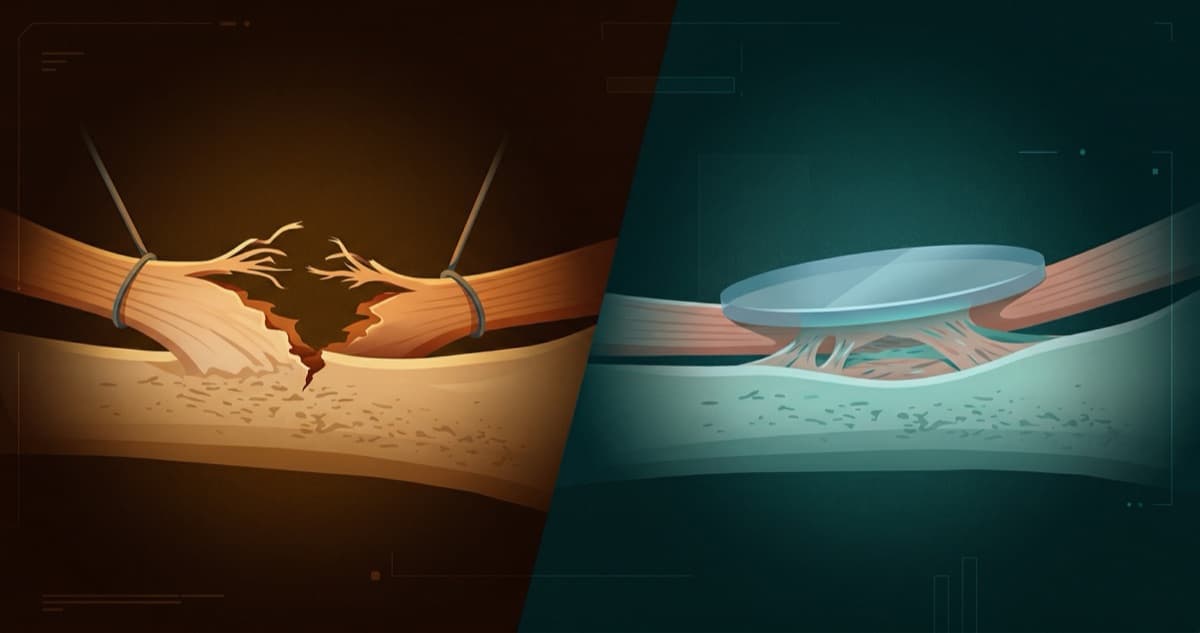
Every orthopedic surgeon agrees: even pressure distribution improves tendon-to-bone healing. Yet a decade of fear after SIS patch failures kept anyone from building the obvious solution. WingHeal starts from first principles.
Sword Health acquires Kaia Health for $285M. Hinge Health IPOs at $3B with $588M revenue. The digital musculoskeletal market enters its consolidation phase. But when exercise libraries become commodities, what actually constitutes a defensible position?
AO Foundation's fracture monitor enters first-in-human trials. Penderia earns FDA Breakthrough Device Designation. CardioMEMS proves passive LC sensors work at scale. The real competition isn't which sensor is best — it's who can turn sensor data into clinical decisions.
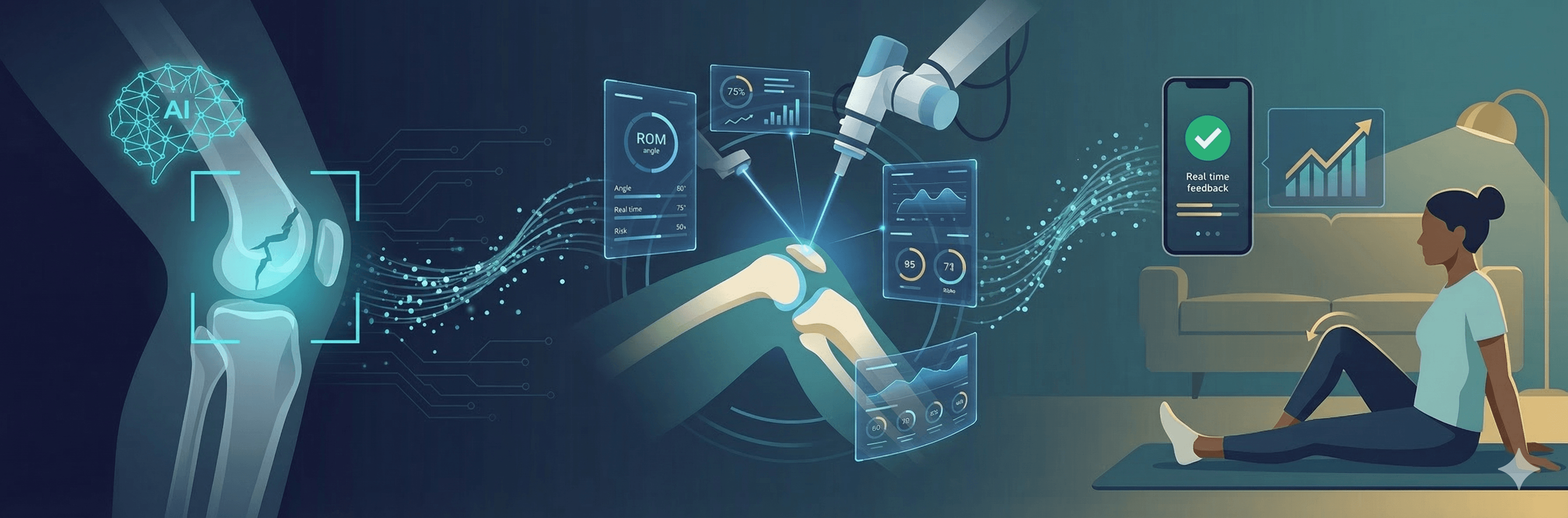
In 2025, the FDA cleared a record 295 AI medical devices. Fracture detection hits 98% accuracy. ML models predict TKA dissatisfaction before surgery (AUC 0.888). But the real AI battleground in orthopedics isn't the operating room — it's the 90 days after discharge.
Traditional post-surgical monitoring relies on imaging and patient-reported outcomes. Discovery R uses a battery-free LC resonant sensor to measure forces at the implant site in real time, detecting 'impending failure zones' during movement — not after structural damage has already occurred.
Rotator cuff repair faces a dilemma: insufficient strength leads to re-tear, and excessive immune response causes rejection. WingHeal combines a PEEK structural augment with low-immunogenic collagen scaffold, showing +71.8% biomechanical stiffness and fibrocartilage formation at 4 weeks in animal studies.