Does a Spoke taking over as Hub require the command line? No. The same capability is offered at three layers of access: engineers get fine-grained low-level control; a nurse just presses one button at the right moment. Package a sysadmin's power into an interface anyone can operate.
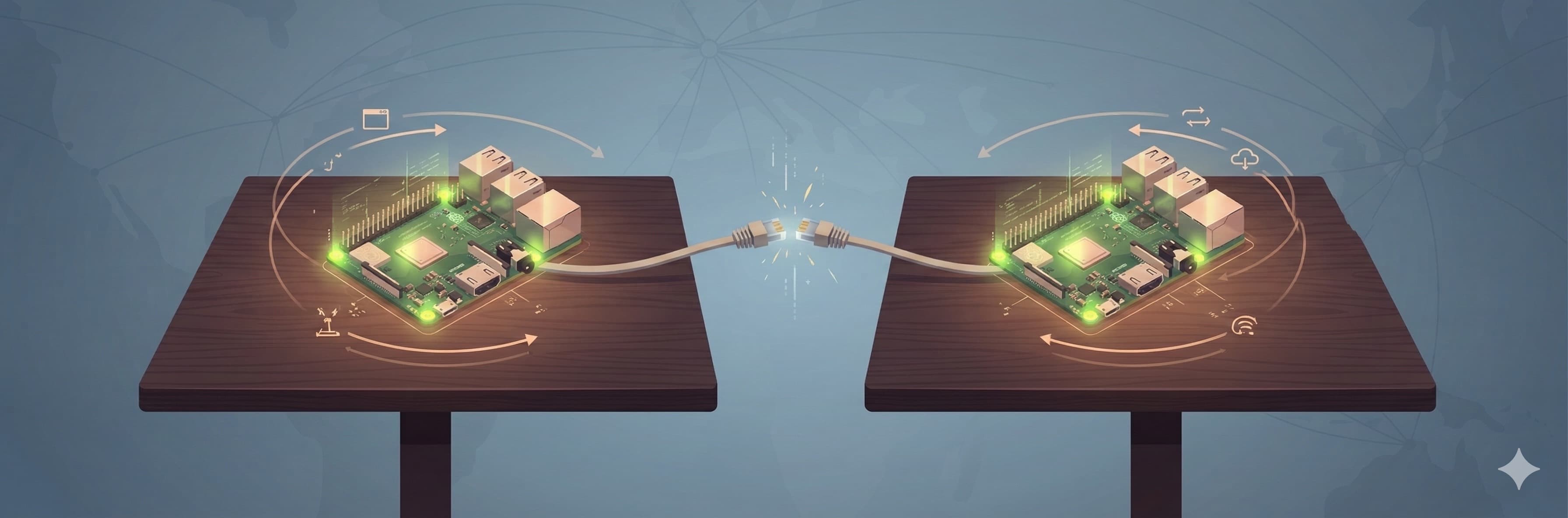
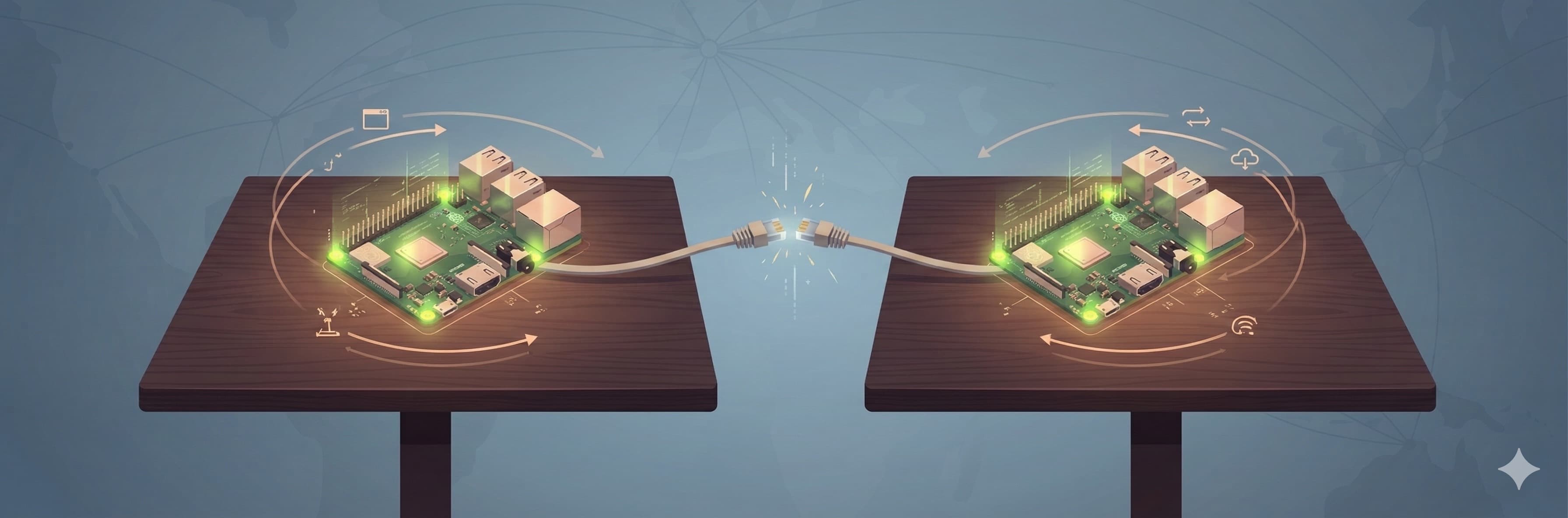
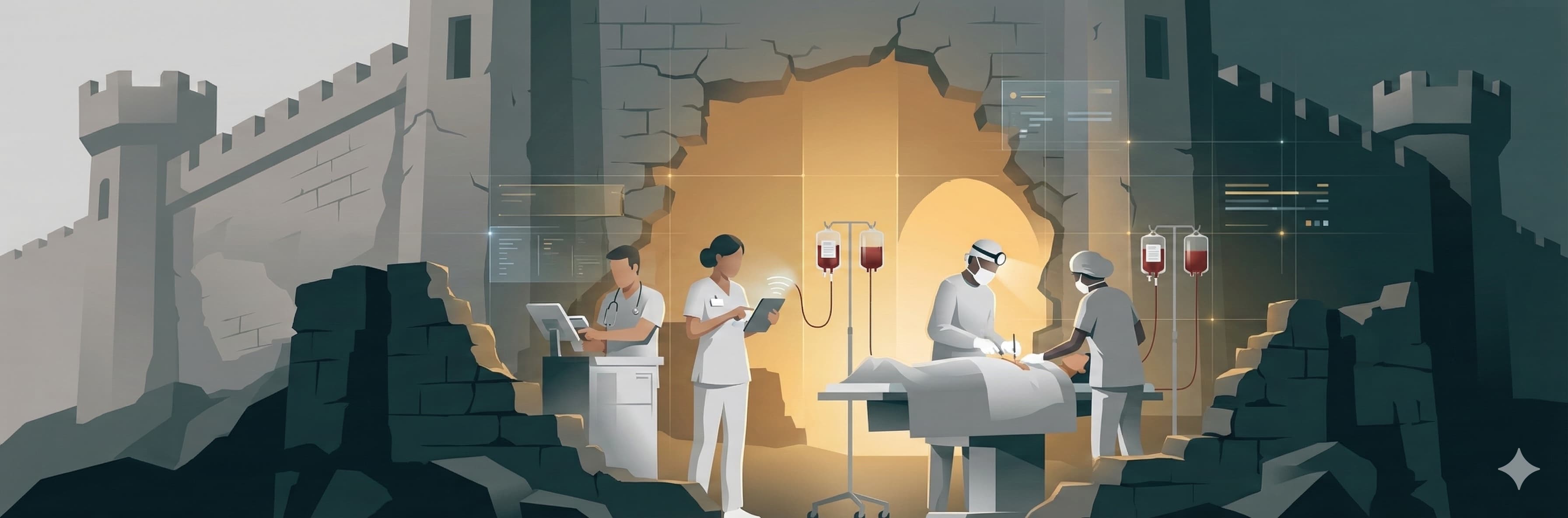
Traditional Hub-Spoke carries one fatal assumption: the Hub is always online. But in a disaster zone, when the Hub goes down, patients cannot wait. xGrid designs for disconnection as the normal state — every node is a complete system, and any one of them can take over.
How long until we run out of O-negative blood? Who authorized the amputation? xGrid's burn rate engine calculates hours-to-depletion in real time, while the multi-signature approval system ensures irreversible decisions are never made alone.
ISBAR is the clinical handoff format used worldwide. Turning it from an oral tradition into a digital system, we found that the real value isn't the format itself — it's what comes after: traceable, verifiable, replayable.
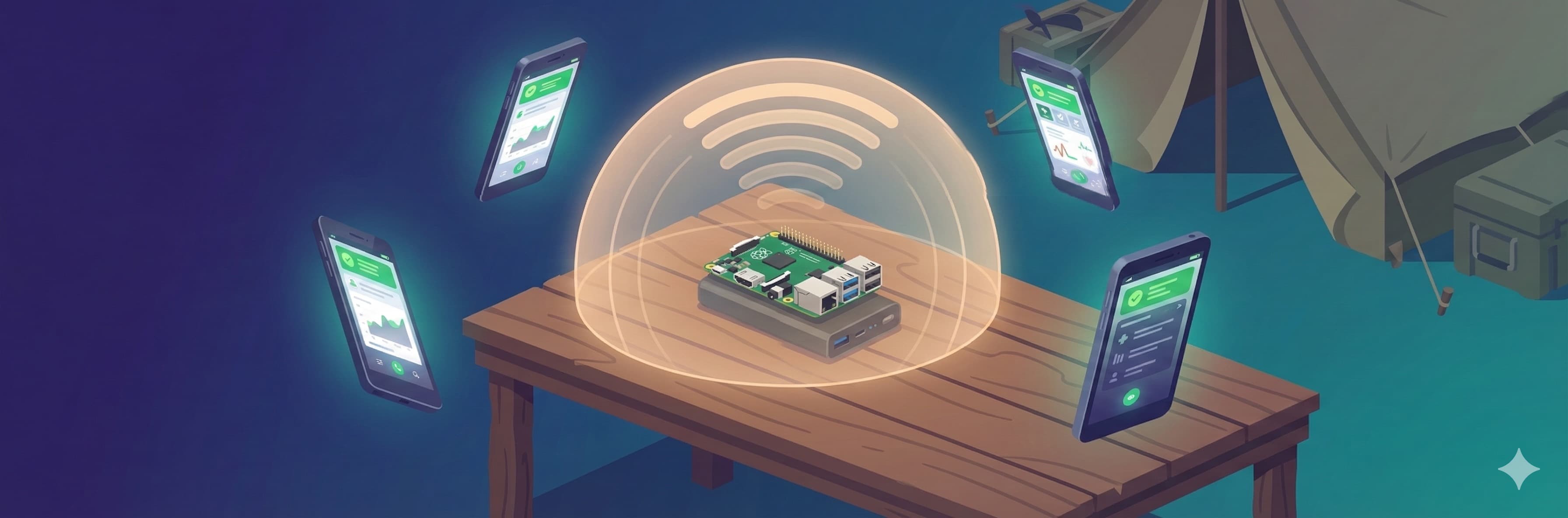
Most medical systems treat offline mode as degradation. xGrid treats it as the default. When your deployment site has no cell towers, no routers, and no IT staff, every design decision starts from zero connectivity.
Safety-I asks how things go wrong. Safety-II asks how things go right. Here's how xGrid puts Safety-II's four design principles into practice in disaster medicine.
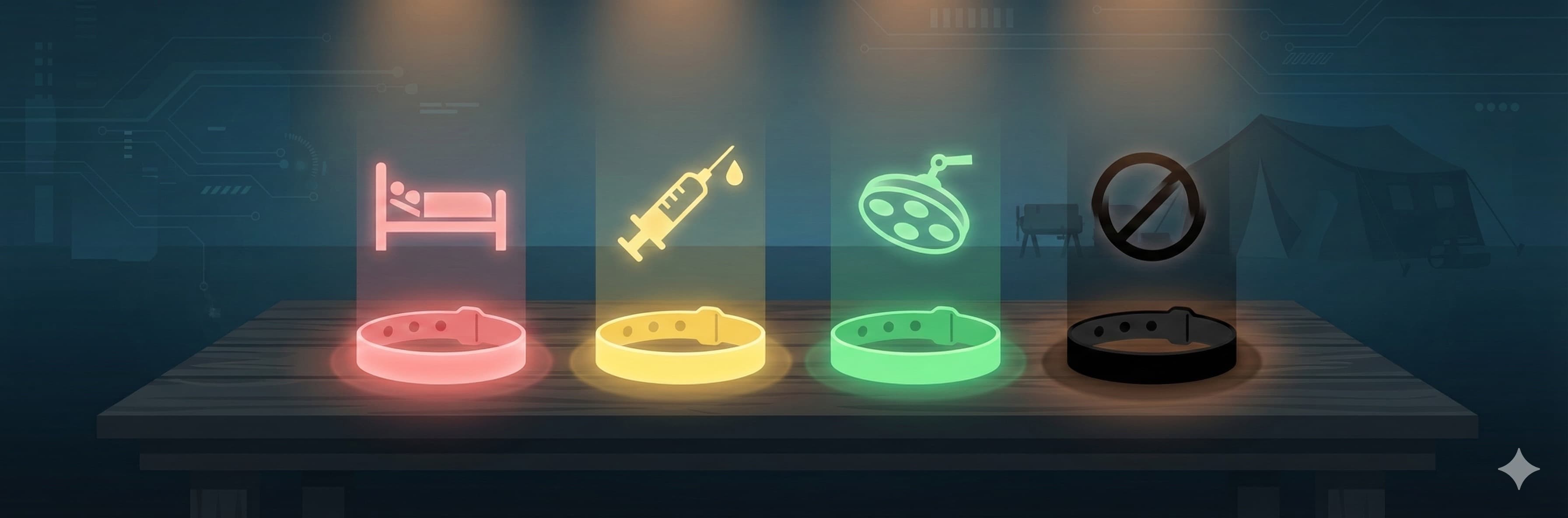
Triage isn't just applying a label. It decides which zone a patient enters, which equipment they get, and where they land in the surgery queue. In xGrid, the color button a nurse presses sets off a chain of resource-allocation decisions.
The software industry's 'bus factor' thought experiment, pushed to the extreme in disaster medicine. How xGrid passed all five Walkaway Tests to reach bus factor approaching infinity.